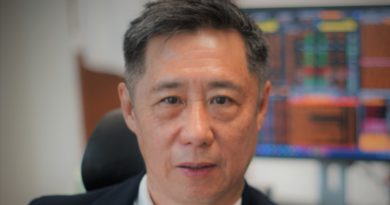

“I challenge the numbers if something doesn’t feel right”
Avijit Agarwal, Chief Risk Officer of the QIO quant investment strategy at Blair Road Capital in Singapore, had a chat with Stefan Nilsson, the Hedge Funds Club’s founder. The conversation covered things such as the increased importance of technology in managing risks, the dynamics between the risk manager and the portfolio management team, Singapore’s VCC fund structure and much more.
Blair Road manages quantitative strategies using market expertise and advanced technology. It trades systematic arbitrage, relative value and occasional tactical directional positions across FX, rates, commodities and equities.
You have worked for several banks in the past. How has your banking background helped you assess and manage risk in asset management?
I was fortunate enough to have worked in a few global banks, managing trading businesses covering a swathe of products and geographies. At various points in time, I ran the EM trading businesses for both Asia and EEMEA, managed yen rates trading, managed treasury investments for Asia, and also supported the Head of Markets Asia. These jobs exposed me to myriad facets of the business – trading, risk management, governance, control, compliance, people management, etc. This experience, garnered over 28 years across geographies like India, Singapore, Japan and the UK, has helped me immensely in assessing risk in our business; and jointly managing the same in partnership with Ajay Agarwal.
What role does technology play in your risk management? And how important is the human input in your risk management?
Technology is important in every aspect of any business today – not just our business, or our kind of business. We need the right tools to ensure we get accurate and timely information on all kinds of risks embedded in the business – market, credit and liquidity. In today’s markets, where price movements are getting increasingly more volatile, these things take on an added dimension in terms of importance. That said, I do retain a bit of the “old school”. One should have the ability to intuitively know if something is wrong or can go wrong. Nothing is truer than the old adage – “If it seems too good to be true, it probably is”. My default setting is to always challenge the numbers if something doesn’t feel right.
How do you as the Chief Risk Officer work with the Senior Portfolio Manager, Ajay Agarwal?
My interaction with Ajay is practically 24×7. He is the person who oversees the overall risk. My role as a CRO is to give him and his PMs an enabling environment in terms of limits, and at the same time, ensure there are sufficient and independent checks and challenges. At the end of the day, we understand we need to be completely aligned in terms of delivering to our stakeholders.
The quant investment strategy is managed at Blair Road Capital, a firm founded by private bankers and which has a wealth management arm. What benefits does this kind of organisational set-up bring to the fund team?
The co-founders of Blair Road Capital, Ian Berclaz and Cedric Stadelmann, have a great deal of experience in the wealth management and private banking space – both in front office and business management. We derive immense leverage from this, especially in areas like investor relations and management, client onboarding, KYC/AML-related matters, etc. Besides, our business essentially grows on the core foundations of BRC; in terms of robust infrastructure, compliance and adherence to MAS guidelines.
From a risk perspective, being part of a fund platform which also houses other funds and business activities, what are the risks you need to keep an eye on?
Value Opportunities VCC, and the sub-funds incorporated herein, are one part of the swathe of businesses managed by BRC, both in the asset management and wealth management space. As CRO, I need to ensure QIO’s assets are appropriately segregated and protected from the other assets being managed. It helps the VCC Act lay down unambiguous regulations in this regard, which ensures client money protection. I also need to have a broad understanding of what are the other businesses being run by BRC, as they can, in theory, pose reputational and financial – depletion of regulatory capital – risk. That said, it can be argued that the other businesses of BRC are running a similar risk on our business. In that respect, I would argue there is always a healthy check and balance here. I talk regularly to Ian and ensure there is complete transparency in terms of how we prosecute our business.
In a volatile and unpredictable world, what keeps a risk manager like you up at night?
Good question. This makes me recall another old adage – if something can go wrong, it will go wrong. Vigilance should be directly correlated to performance. The more a fund appears to be doing well, the more one has to be on guard for something which can derail the business. Our business is extremely ops-intensive – it being quantitative and low-latency driven; we do tens of thousands of trades a day. The risk of misbookings, leading to misstatement of risk, is significant. And misstating of risk can lead to significant P/L events, which, as Dr Murphy would tell you, almost always go against you. We are also very reliant on an extensive ecosystem of networks and servers across multiple trading venues, which “talk” to each other. Loss of connectivity and/or ruptures in trading applications could cause losses. I also have to guard against a gradual creep of style drift, where the pressure to generate returns for our clients makes us deviate more and more from what we are good at. And I am not even talking here about all the other day-to-day risks – market, credit, ops, liquidity, margin, etc. My job is to be in a state of constant vigil, which I guess is the best way to ensure I manage to get some sleep.
As a Singapore-based fund management team, you have opted for a local VCC structure for your fund. How did you arrive at that decision?
For us, this was a no-brainer. Right from day one, Ajay and I were very clear that we wanted to set up the business in Singapore. This jurisdiction provides a host of advantages – a great regulator, rule of law, risk perception amongst our stakeholders, access to talent, pool of investors available given Singapore’s pre-eminence as a wealth centre, an extensive broker/bank network based in Singapore and MAS’s clear vision in terms of promoting the fund management industry. Frankly, the list of positives is endless.