“Stop losses are key to managing risk”
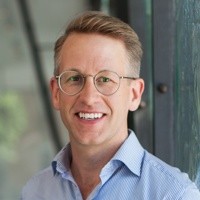
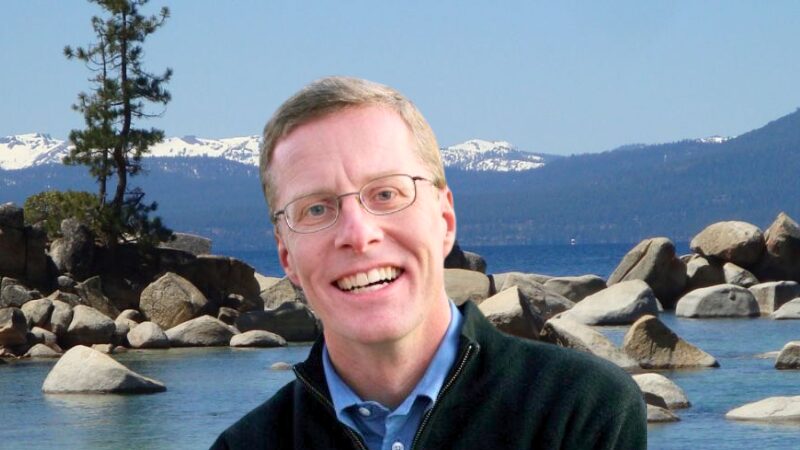
Hedge Funds Club Founder Stefan Nilsson caught up with Ted Parkhill, CEO and Founder of Incline Investment Management, a systematic macro investment manager based in Nevada, USA. “Political interference can cause short-term pain for systematic approaches like ours,” says Ted about the current volatile political environment and explains how Incline manages risks.
Ted Parkhill has over 30 years of management experience in the investment business. He is a former Assistant Professor of Business at Sierra Nevada College. Prior to founding Incline, he was the director of marketing for Zazove Associates, a multi-billion-dollar quantitative convertible securities manager. He was a senior marketing executive at John W. Henry Company, one of the original Commodity Trading Advisors. Before joining the alternative investment space in 2001, Ted spent over ten years in various sales and marketing management roles in the mutual fund industry, notably with Ivy Mackenzie in the US and with Investors Group in Canada. He began his career as an investment analyst with Great-West Life.
As a boutique manager in a crowded field, what are your biggest challenges? What keeps you up at night?
Our biggest challenge is to meet with investors who have some understanding of the importance of non-correlated diversification. This is particularly true when we are in a strong equity market. How soon 2022 is forgotten, much less the GFC. We used to worry about cybersecurity. A few years ago, we hired a cybersecurity firm that implemented the right tools to manage our security systems. I still worry about the integrity of the system. Are the exchanges secure? Who is monitoring them? Can an LME Nickel-like scenario happen again?
How often do you, as a systematic trading firm, have to tweak and improve your models?
We are constantly conducting additional research. But one of the hallmarks of a true systematic manager is the discipline they apply to their models. We limit our tweaks to adding and subtracting markets, predicated on whether the market’s liquidity qualifies for inclusion. We have remained true to our original framework since our launch over 13 years ago. When we find a significantly intriguing new approach, we will seek to introduce a new program to investors that might suit their appetite for risk or desire for a specific type of diversification.
Managed futures funds can be very volatile. How important are stop-loss rules to your risk management? Are they hard stops that can’t be overridden by the PMs?
The beauty of managed futures is that there is a myriad of choices amongst managers. There are some managers that are comfortable with offering 35%-40% volatility. Given my experience with John W. Henry & Company, where vol in the 30s was not uncommon, I learned that most investors prefer more palatable vol. Delivering “acceptable vol”, which we define as the equivalent of modern equity market volatility, became one of our core objectives, in addition to seeking to provide a non-correlated return stream. Our vol on our flagship strategy comes in just under 17, which is right on target and our correlation is almost perfect at 0.03. We use stop losses on every single trade. In our view, it is the key to managing risk. We know in advance the maximum amount of risk we are willing to take on any initial trade. It really is the definition of “managed” futures. The stops are built into our model and are not overridden by our PMs. Intriguingly, we apply stops across our portfolio, whether we have futures or cash/equities exposure.
How has the current chaotic political climate of unpredictability and trade wars changed the way you position and manage your portfolios?
Chaotic is the operative word! In Q1 of 2025, the economic uncertainty created by the unpredictable tariff talks definitely impacted what we do. It is this level of political interference that can cause short-term pain for systematic approaches like ours. However, our central philosophy is that markets will normalise, trends will reform to reflect the new environment post any political intervention, and that our strategy – and frankly, most of the industry – is designed to capture.
While being a relatively small firm, Incline manages no fewer than four different strategies. What is the thinking behind this? Why not concentrate on one core strategy?
As mentioned earlier, we design new strategies for two main reasons: 1) to respond to client demand, or 2) when we spot an opportunity with a specific approach that we feel can capture the unique properties of the underlying instruments in which we trade, crypto and the VIX come to mind! Since we are systematic by intent, we can easily manage several different types of systematic strategies.
Incline has its headquarters in Nevada. What made you base the business in Nevada rather than on the east coast of the US, where many of your peers are based?
I had moved to Nevada pre-GFC for a one-year sabbatical. We moved to Incline Village, Nevada and then realised that Lake Tahoe was a wonderful place to raise our family. And as it turned out, legendary trader Ed Seykota was based in Incline Village. One of his early disciples, Todd Hurlbut, became my business partner – and now our CIO – when we discovered we shared similar investment philosophy about trading and markets. Not only is the quality of life exceptional, but it also allowed us to focus on building our strategy in such an idyllic setting. And since most of the names of most Roman and Greek Gods, Avenues in New York City and rivers in Connecticut have been used for hedge fund names, the Lake Tahoe area became our nomenclature for all of our strategies, with our flagship strategy called The Tahoe Fund.
You have recruited several of your team members straight from university. What are the advantages of hiring young people and training them rather than hiring people with experience from other firms?
I had the advantage of being a professor at the college from which I was able to attract the best and brightest from the school. Given our size, there was some faith on the part of our new hires! However, we found the offer was attractive since it is challenging for any new graduate to ‘break in’ to the hedge fund space. Only later did they find out what a fascinating industry they had joined. We have really only lost one young graduate that we hired, when he decided to move “down” to the city to join a larger firm. Otherwise, our tenure averages in the seven-year range. The advantage of hiring new graduates is that they don’t arrive with any bad habits or preconceived notions on how it should be done. It did, of course, require more of the partner’s time to train the team, but now we have a very capable and experienced group.
How do you unwind away from the markets? What keeps you sane and grounded?
I still play competitive hockey – granted it is the Night Hockey League. In the US, I need to say ‘ice’ hockey, but as a Canadian, I think that is redundant. During the summers, I also race an E-Scow, a 28-foot flat-hulled sailboat that is a racing machine built by the late Buddy Melges’ firm in Wisconsin, at our summer place in Ontario. I also try and fit in tennis and have recently been learning to golf. Regarding my sanity, I read about two books a week. Mainly historical fiction, which I find relaxing, and I tend to learn a lot as well. I am also fortunate to still be married to the lovely Kiwi I met on the first day of graduate school at Cornell University in upstate New York. It has been 33 years, and we have three accomplished adult children who are my back-up retirement plan.