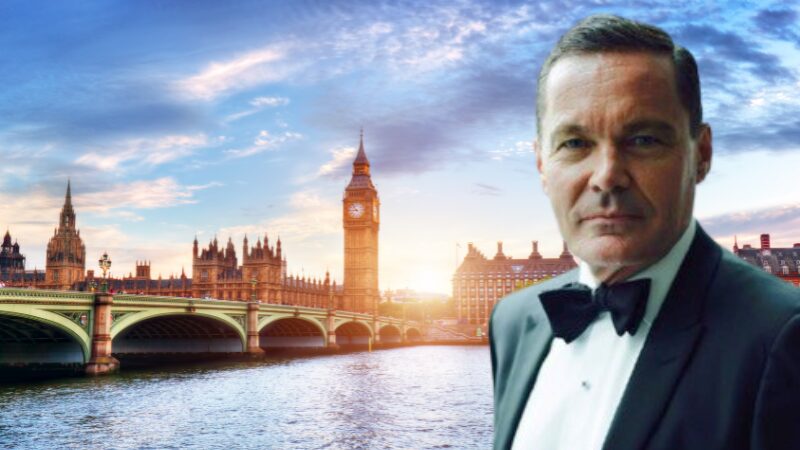
Paul Cuthbert-Brown: From Downing Street to Wall Street (and back?)
Englishman Paul Cuthbert-Brown started his career as a public servant in London. Following a few years at the Ministry of Defence, he moved into the Cabinet Office, where he served as Private Secretary to the Secretary of the Cabinet of Margaret Thatcher. A successful international career in finance followed. Currently an independent fund director with Hedge Funds Club sponsor Solas, he spent many years in leadership roles at Lehman Brothers. His experience in the alternative investment space includes being a Partner at Vulpes Investment Management, Chief Risk Officer at Gordian Capital, and CEO of Creo Capital.
He also takes on interim consulting and CEO positions, often in the private equity special situations space when there is a particular short-term challenge to address. His most recent appointment is as Geschäftsführer of a company manufacturing generators in Germany. He is also a Senior Advisor with Strategia Worldwide, the geopolitical consultancy founded by Sir Richard Shirreff, NATO’s former Deputy Supreme Allied Commander Europe.
Hedge Funds Club founder Stefan Nilsson had a frank discussion with Paul in Singapore about how his past has helped him in his finance career, the importance of education, how Britain should be governed and much more. Buckle up and enjoy the ride!
How did you pivot from public servant to a career in finance?
My main roles in the MoD were as an interface between Special Forces and nuclear security/safety and political oversight. This sometimes involved accompanying deployments when things got interesting. I may have picked up some “bad” habits, including going from A to Z without necessarily reciting all the letters in between. There is, of course, a certain impatience that comes from years spent navigating high-stakes environments, a bias towards progress over process. While this sometimes set me apart from more orthodox colleagues, it also meant that results were delivered when urgency mattered.
When I tendered my resignation to the Secretary of the Cabinet, the senior private secretary in his office remarked, “I did not think your style fitted in round here”. I replied, “Thank you”. That summed it up neatly, but it did not mean that those who valued decisive action did not appreciate my approach. One such figure, a Deputy Secretary who would himself later become Secretary of the Cabinet, may have been the person who recommended me to the founder of a new firm in London, an affiliate of Allen & Company in New York. I do not know for certain, but it would fit the timing and the conversations that followed. The founder took me on as someone who knew nothing about finance, but was a quick study and willing to take personal responsibility for decisions. That was the true pivot point.
Over the years, I have also come to understand the importance of calibrating that sense of urgency to the culture of the organisation. Every institution has its rhythm, and learning to respect that rhythm strengthens one’s effectiveness. I have learned the value of engaging more deeply with the broader team in shaping decisions. Decisiveness is often welcome in moments of uncertainty, but there is real merit in ensuring that everyone feels heard and invested in the chosen direction.
In the end, results endure, but so do relationships, and I strive to honour both in my work.
How has your past in the corridors of power during Britain’s Thatcher era helped you in your career in high finance?
The Thatcher era itself was important, but perhaps the deeper inheritance came from my father, a WWII veteran, also a banker, and the archetypal principled English gentleman. He, and the culture he embodied, gave me a resolve to find absolute clarity about the right thing to do and the willingness to stand up for it regardless the cost. That clarity allowed me to take the shortest, most direct path to any objective, whether in government or in business. In high finance, you occasionally face situations where the easiest decision for your career is not the right one for the firm or its clients. That early training made those moments straightforward, if not always easy.
Over the years, you have worked with many people who have risen to become leaders, including Robyn Grew, who is now CEO of Man Group. How important is it to stay in touch with people and nurture one’s network in the long term?
Robyn was probably the standout hire of my career. I noticed her when she was temporarily assigned to Lehman in Tokyo during the 1999 FSA inspection regime, which was new at the time and very aggressive. Two firms had already suffered disastrous outcomes. Lehman was next, with the Bloomberg headline “Lehman raided by FSA”.
By the time the last foreign firms were inspected, the headlines had softened to “inspection”, but the scrutiny was the same. Our team, with Robyn as a standout contributor, outperformed the market. No suspension, no licence loss, no sanction. That was almost unique.
I persuaded her to relocate to Tokyo as Head of Compliance. She then rose to Head of CAD (Corporate Advisory Division: Compliance, Audit & Legal) and moved on to senior roles in New York before her post-Lehman ascent. None of this surprised me. She was that good.
A significant part of that success was the team we built. I was recognised for creating a highly competent group that happened also to be diverse across every category, but always because of merit, not identity. I was largely blind to those attributes. Capability, integrity and judgement were what mattered. I empowered people, backed them when they were doing the right thing and defended them when things were difficult. Open communication meant decisions were “ours”, not “theirs”, even when something had gone wrong. It created a culture of trust and accountability, which is why so many of those colleagues have become leaders in their own right.
The Lehman diaspora is unusually broad because of the firm’s fate. If one needs a sympathetic ear with experience in any geography or business line, there is almost certainly someone to call. The trust from those days has endured.
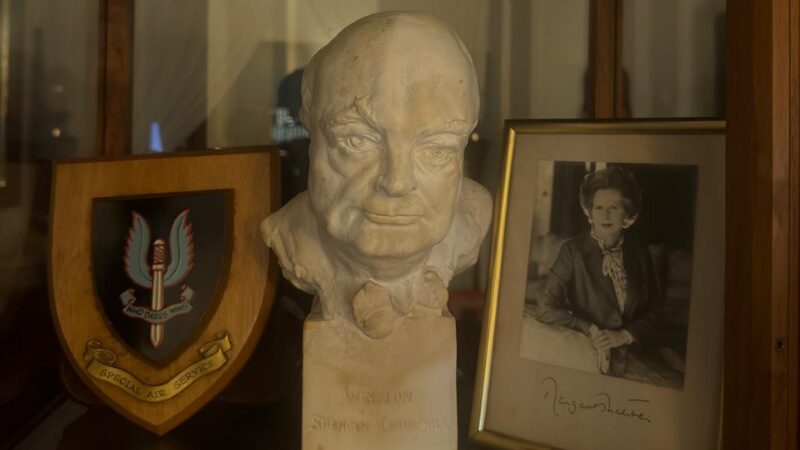
You worked closely with the Thatcher Cabinet. Britain of today is very different, with what seems an often-misguided Labour government and a weak and fragmented opposition. What would be the most important issue you would change if you were involved with governing Great Britain today?
There are two linked issues.
First, unassimilated immigration.
Immigration without assimilation is invasion. That is not a comment on individuals, many of whom are talented and welcome, but on a policy failure to require and support integration. A cohesive nation cannot be built if newcomers are not expected to join the common culture. This does not mean a society cannot be enriched by newcomers, but it does mean that those who choose to come should not expect to impose the cultural norms of the places they chose to leave.
Second, the erosion of incentives to work.
The state now accounts directly for more than half of GDP, and indirectly far more when including private firms that exist only to service it. At the same time, it has never been easier to live indefinitely on public support. A single doctor’s note can now place someone in a medical category that pays roughly £25,000 a year in benefits, more than a full-time minimum-wage job after tax.
This erosion of incentives is intensified by the tax burden placed on those who do work. For many ordinary earners, effective marginal tax rates climb above 50 per cent once income tax, national insurance, council tax, VAT and the withdrawal of benefits are accounted for. In practice, this means the state takes more of the next pound earned than the individual keeps. When work is taxed heavily and dependency is subsidised generously, it is not hard to predict which behaviour becomes more rational. The burden falls disproportionately on the productive while the rewards increasingly flow to those outside the workforce altogether. And the lure of a better life for free pulls in migrants.
Norman Tebbit urged people to get on their bikes to find work. Today, the state has improved the offer: it gives you a car instead, just not to find work. Almost 800,000 cars are provided via the Motability scheme solely on the basis of those elastic medical sign-offs – now costing taxpayers well over £3 billion a year.
This doesn’t represent compassion; it is a reward structure that mistakes dependency for need and hollows out the work ethic that built Britain.
I have thought about this deeply and recently completed a 200+ page policy proposal, “🇬🇧United Kingdom 2026+”, with fifteen chapters, an emergency 90-day legislative plan, and full fiscal costings. I have shared it with Reform Party leadership. The day someone is serious about implementing ideas like these is the day I would return to Britain and finish my career where I began it – in national service.
As Margaret Thatcher warned, the socialist left has turned fear of global warming into an excuse for global socialism. Modern Britain has taken that warning as an instruction manual. It is more than time for a government prepared to reverse it.
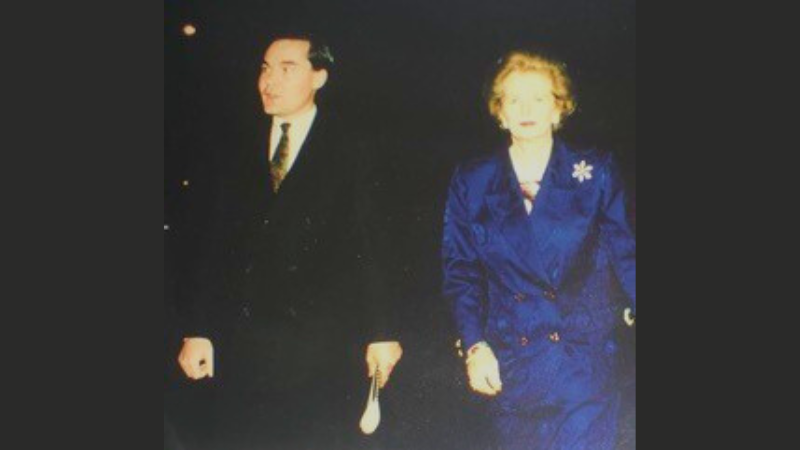
Education is an important factor in the hedge fund industry as well as the finance world in general. Firms are looking for smart, well-rounded people who can quickly learn on the job. British education remains a major global power, but the current government seems to undervalue it. Some universities have lost their edge, while a 20% tax has been implemented on private school fees, forcing some schools to close and many families to make drastic decisions about their children’s schooling. Your educational journey included both boarding school as well as the University of Cambridge and London Business School. How would you fix the education system’s problems of today?
I am sad to say that, overall, the UK education system has been captured, along with many of the country’s core institutions. The attack on private education is levelling down. If one wishes to move to wholly public provision, the model should be to raise standards in public schools, then move to a voucher system.
The template already exists: Katharine Birbalsingh’s Michaela Community School in Wembley has transformed outcomes in one of the most challenging inner-city environments through knowledge-rich curriculum, discipline, and zero excuses. Replicate that model across the state sector, then move to vouchers. Levelling down the private schools because Labour ideologues resent excellence helps no one – especially when so many of the loudest critics quietly send their own children private.
Throughout your life, you have been dedicated to contributing to various charitable causes. What cause is closest to your heart now and why?
I serve on the advisory board of the PII Foundation, a non-profit that delivers virtual healthcare to people who cannot reach or afford medical support, whether because they are displaced by conflict, trapped in occupied territories or living in remote areas. It provides a hospital in the cloud that offers free telehealth consultations in the patient’s own language, often with doctors who are themselves displaced and supported by the Foundation to serve their communities.
The impact has been remarkable. Tens of thousands of consultations have already been delivered to people in acute need, from war zones to disaster areas, using a secure, low-bandwidth, high-definition platform that works even when normal services have collapsed. The Foundation offers not just primary healthcare but psychological support, maternal and child health, and even veterinary help where that is essential to a family’s survival.
What draws me to the cause is its combination of technology, humanity and neutrality. It does not take sides in any conflict. It simply uses modern tools to give people dignity and access at the moment they need it most. That is a noble mission.
For many years, you have been based in Singapore. As someone who is working and living internationally, why did you choose Singapore as your home?
My longevity in Singapore is something of an accident. I moved here when I left Lehman in 2004 to found Creo Capital with friends and colleagues. I expected to relocate to London or New York, but post-GFC opportunities kept me here longer than expected. Each time I contemplated moving on, perhaps to my second home in Umbria, something compelling intervened. Over time, Singapore became home. Britain, if it ever decides to save itself, knows where to find me.